
Key Takeaways
- Standing seam is the 40-60 year roof. No other residential or light commercial system comes close to its lifespan. The concealed fastener design eliminates the exposed-screw failures that plague cheaper metal roofs, and the interlocking panels create a weathertight system that handles Houston hurricanes better than anything else on the market.
- The upfront cost is real — $10 to $18+ per square foot — but the math works over time. When you divide the cost by decades of service instead of the 20-25 years you get from shingles, standing seam’s cost-per-year is competitive. Factor in lower energy bills from reflective metal, insurance discounts, and zero mid-life replacements, and the financial case gets stronger.
- Not every metal roof contractor knows standing seam. This is precision work — panel profiles, thermal expansion allowances, clip systems, and flashing details that are completely different from exposed-fastener metal. Ask specifically about standing seam experience, not just “metal roofing.”
What Standing Seam Actually Is
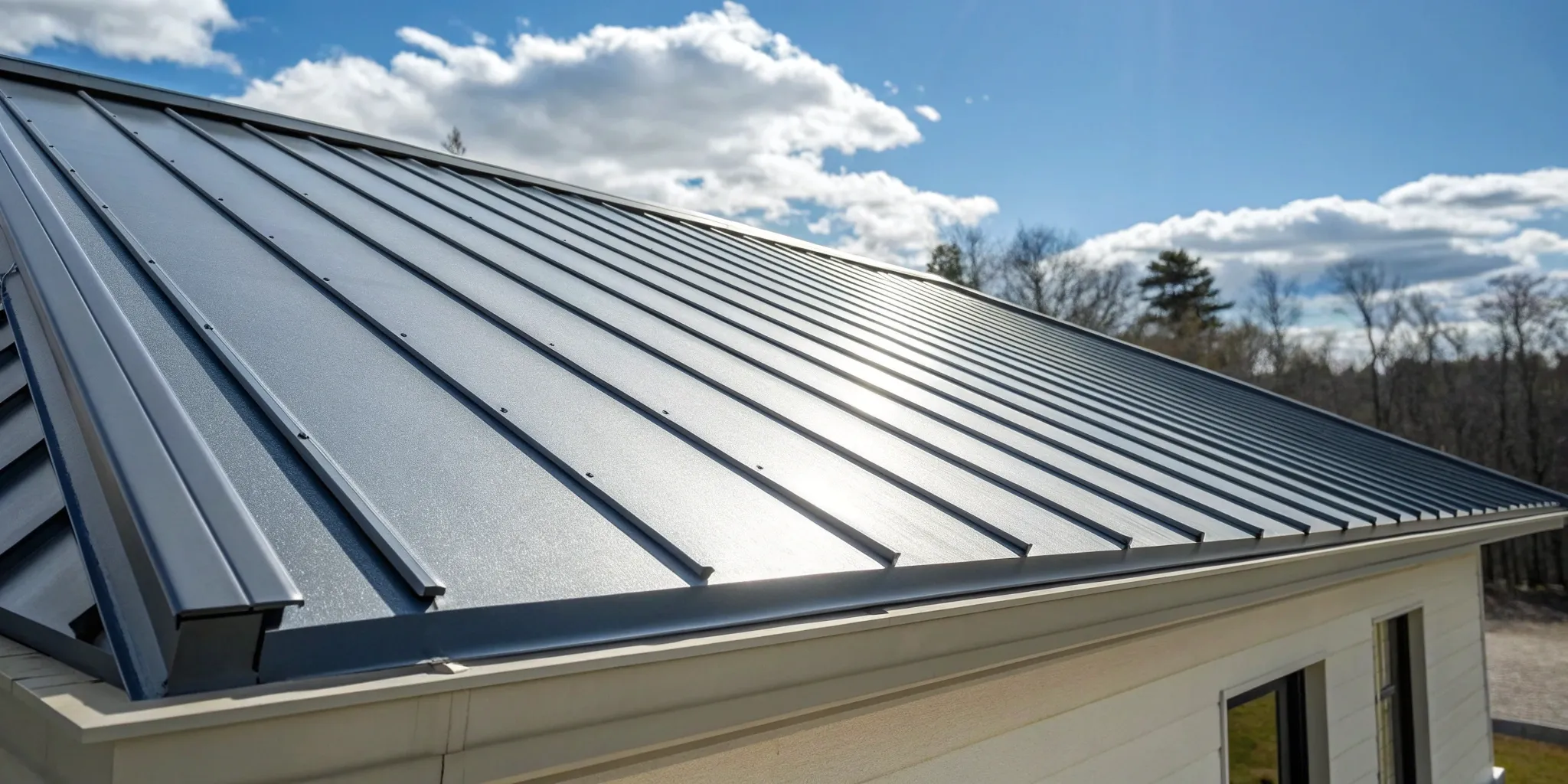
Standing seam is a metal roofing system where long panels run vertically from ridge to eave, joined by raised seams that stand 1″ to 2″ above the panel surface. The critical distinction: the fasteners are hidden underneath the seam — they clip to the roof deck and the next panel snaps or is mechanically seamed over the top. Nothing is exposed to weather. No screw heads sitting in the rain. No rubber washers that dry out and crack in Houston’s sun. That concealed fastener design is why standing seam lasts twice as long as exposed-fastener metal and handles wind significantly better.
Understanding Standing Seam Roof Houston
The Components
A standing seam system has more engineering than people realize:
- Panels: Typically 12″ to 18″ wide, made from 24-gauge or 26-gauge Galvalume steel (steel coated with aluminum-zinc alloy for corrosion resistance), or aluminum for coastal applications. The panels are either roll-formed on-site from flat coil stock or factory-formed to precise dimensions.
- Clips: The panels float on clips that allow thermal expansion. In Houston, a 20-foot metal panel can expand nearly 1/4″ between winter and a summer afternoon. Fixed clips at the ridge and floating clips down the panel allow this movement without buckling or oil-canning.
- Seams: Either snap-lock (panels click together — faster installation, adequate for most residential pitches) or mechanical seam (seams are crimped with a special tool — creates a tighter connection, better for lower slopes and commercial applications).
- Underlayment: High-temp synthetic underlayment rated for metal roofing. Standard felt degrades under metal panels in Houston’s heat.
Why Standing Seam Works So Well in Houston
Hurricane and Wind Performance
This is where standing seam separates itself from every other roofing system. The concealed clip design means wind has nothing to grab — no exposed fastener heads, no exposed panel edges. Properly installed standing seam carries wind ratings of 140mph+ depending on the panel profile and clip spacing. We’ve inspected standing seam roofs after Category 2 storms that had zero damage while the shingle roofs on adjacent houses were stripped to the deck.
The engineering matters though. Clip spacing has to match the wind zone — closer spacing in perimeter and corner zones where uplift forces are highest. Panel gauge matters — 24-gauge handles wind loads better than 26-gauge. And the ridge and eave details have to be done right, because those are where wind gets under poorly detailed metal roofs. This is why standing seam is a contractor-dependent system. The panels are only as good as the installation design. This is particularly relevant for standing seam roof houston projects in the Houston area.
Energy Efficiency
Metal reflects solar radiation instead of absorbing it. On a 95°F Houston day, a dark shingle roof surface can hit 160°F+. A light-colored Galvalume standing seam panel on the same house might reach 120°F. That 40-degree difference at the roof surface translates directly into lower attic temperatures and less work for your air conditioning. Building owners routinely report 10-20% cooling cost reductions after switching from shingles to standing seam — real savings that compound over decades of ownership.
Longevity and Low Maintenance
Standing seam is genuinely low-maintenance. There are no granules to lose, no adhesive seams to separate, no membranes to puncture. The Galvalume coating resists corrosion for 40+ years in Houston’s humidity. The paint systems on quality panels carry 30-40 year fade warranties. Maintenance is basically: keep the gutters clear, check flashings annually, and make sure nothing has impacted or scratched the panels. That’s it. Compare that to shingles that need granule loss monitoring, storm damage assessment, and replacement every 20-25 years, and the maintenance burden over a building’s lifetime is dramatically lower.
What Standing Seam Costs in Houston
Standing seam is the premium option, and the pricing reflects it. But “expensive” is relative when you’re comparing a roof that lasts 20 years against one that lasts 50. For standing seam roof houston in Houston, this factor plays a significant role in project outcomes.
Price Ranges
- 26-gauge Galvalume, snap-lock profile: $10–$14/sqft installed. The entry point for standing seam. Good for residential and light commercial applications with standard pitch.
- 24-gauge Galvalume, snap-lock or mechanical seam: $12–$16/sqft. Our most-recommended residential spec. Stronger, handles wind better, and the cost difference from 26-gauge is usually worth it.
- 24-gauge with premium Kynar/PVDF paint finish: $14–$18+/sqft. The premium spec — thicker gauge, highest-quality paint system with 35-40 year fade warranty, maximum wind rating. This is what we recommend for coastal Houston properties and homeowners who want the best available system.
- Aluminum (for saltwater-adjacent properties): $16–$22+/sqft. Aluminum doesn’t corrode in salt air the way steel does, even Galvalume-coated steel. For buildings within a few miles of the coast, aluminum is the right material regardless of cost.
What Drives the Price
Material is roughly 40-50% of a standing seam project cost. The rest is labor — and standing seam labor is genuinely skilled work. Panel cutting, flashing fabrication, clip installation, thermal expansion management, seaming (especially mechanical seaming), and the detail work around valleys, hips, and penetrations all require experienced metal roofers. A shingle crew can’t do this work. A general metal roofing crew that mostly installs exposed-fastener R-panels might not do it well. This is an important factor for standing seam roof houston projects.
Roof complexity is the biggest price variable after material choice. A simple hip roof with no dormers, valleys, or skylights is a straightforward standing seam install. A cut-up roof with multiple dormers, valleys, sidewall transitions, and a dozen penetrations can take three times as long to flash properly. Every transition point is a custom flashing detail, often fabricated on-site from flat sheet metal by the lead installer. That’s where the craft shows up — and where cutting corners creates leaks.
Finding the Right Standing Seam Contractor
We’re biased — we install standing seam roofs in Houston and we think we do it well. But whoever you hire, here’s what to look for. Houston building owners considering standing seam roof houston should keep this in mind.
Standing Seam-Specific Experience
Ask to see photos of completed standing seam projects. Not just the finished panels — the detail work. Show me your valley flashing. Show me a chimney transition. Show me a sidewall to standing seam detail. Those photos tell you whether the crew understands the system or is learning on your roof. We keep photo documentation of every standing seam project specifically because we know informed buyers want to see the details before signing.
Certifications and Manufacturer Relationships
Standing seam panel manufacturers (Sheffield Metals, ATAS, McElroy Metal, Drexel Metals) offer training and dealer programs. A contractor who has a direct relationship with the panel supplier typically has access to technical support during installation, better pricing on materials, and warranty terms that fly-by-night installers can’t offer. Ask who supplies their panels and whether they’re an authorized dealer or distributor.
The Right Questions
- What gauge and panel profile are you specifying? Why?
- Snap-lock or mechanical seam for my roof pitch?
- What clip system are you using, and what’s the spacing in the perimeter wind zones?
- Are panels being roll-formed on-site or factory-cut?
- What’s your warranty — workmanship separate from materials?
- How many standing seam roofs has this crew (not just the company) installed?
Common Standing Seam Issues
Oil-Canning
Oil-canning is the wavy appearance that sometimes shows up in flat areas of metal panels. It’s a cosmetic issue, not a structural one, and it’s inherent to thin-gauge flat metal. Some degree of oil-canning is normal and doesn’t affect performance. But excessive oil-canning usually means either the panels weren’t formed properly, the substrate isn’t flat, or the clips aren’t allowing proper thermal expansion. Heavier gauge panels (24 vs. 26) and striations (pencil ribs pressed into the flat area) both reduce oil-canning visibility. This is a key consideration when evaluating standing seam roof houston options in Houston.
Noise
Metal roofs have a reputation for being loud in rain. With modern standing seam systems installed over solid decking and proper underlayment, the noise difference from shingles is minimal. We’ve had multiple clients tell us they expected their new metal roof to be loud and were surprised they couldn’t tell the difference during a storm. The air gap between the metal and the deck, combined with insulation and underlayment, dampens the sound significantly. For standing seam roof houston, this consideration matters significantly.
Denting
Large hail can dent standing seam panels. The panels remain functional — water still sheds, the seams stay locked — but the dents are visible. Thicker gauge helps. 24-gauge Galvalume resists dent damage meaningfully better than 26-gauge. For Houston, where hail is a regular occurrence, 24-gauge is our standard recommendation for that reason alone.
Related RISE Roofing Services
Explore our related services: Standing Seam Roofing, Metal Roofing, Roof Replacement, Roof Inspection. Contact RISE Roofing at (832) 345-9527 for a free estimate. Understanding this helps Houston property owners make informed standing seam roof houston decisions.
Frequently Asked Questions
How long does a standing seam roof last in Houston?
40 to 60 years for quality Galvalume or aluminum panels with proper installation. We know of standing seam roofs in the Houston area that have been up for 35+ years and are still performing without issues.
Is standing seam worth the extra cost over shingles?
If you’re staying in the home long-term, yes. A standing seam roof at $15/sqft that lasts 50 years costs $0.30/sqft per year. Shingles at $8/sqft that last 22 years cost $0.36/sqft per year — and you go through the hassle and expense of replacement at least once. Add the energy savings and insurance discounts from metal, and standing seam often wins the long-term math.
Can standing seam handle Houston hurricanes?
Standing seam has the highest wind rating of any residential roofing system — 140mph+ with proper clip spacing and installation. It consistently outperforms shingles, tile, and exposed-fastener metal in post-hurricane damage assessments. The key is proper installation engineering for your specific wind zone. This is particularly relevant for standing seam roof houston projects in the Houston area.
Does a standing seam roof increase home value?
Metal roofs consistently add resale value — most studies put it at 60-85% return on investment. Buyers in Houston increasingly understand the wind performance, longevity, and energy benefits. A home listing with “50-year standing seam metal roof” carries real weight in a market where buyers worry about the next hurricane season. Houston property owners evaluating standing seam roof houston should weigh this carefully.
For more information about roofing standards and best practices, visit the Metal Roofing Alliance.