
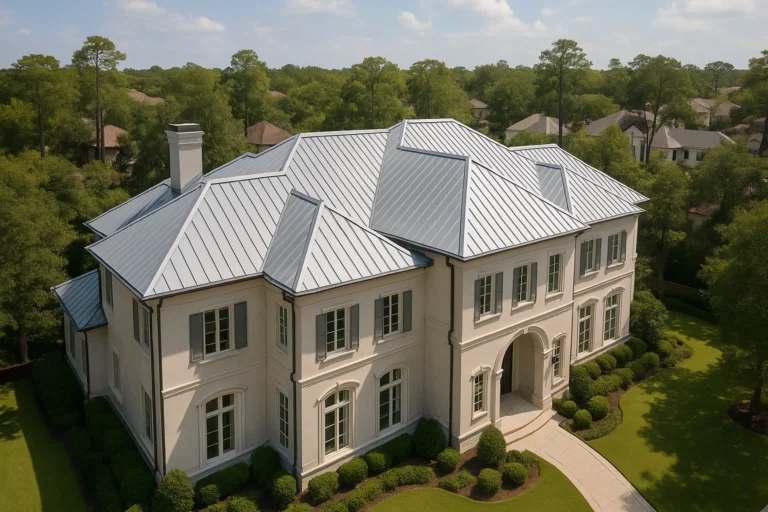
Metal Roof vs Shingles: Which Is Right for Your Houston Home?
Metal roofs cost $12-$22/sq ft installed vs $4-$8 for asphalt shingles, but last 40-70 years vs 20-30 years. In Houston's storm-prone climate, metal's Class 4 impact rating and 140mph+ wind resistance can earn an impact-resistant insurance discount, improving the long-term ROI — each Texas insurer sets its own discount and criteria, so ask your carrier what yours offers.
| Factor | Metal Roof | Asphalt Shingles |
|---|---|---|
| Cost (installed) | $12-$22/sq ft | $4-$8/sq ft |
| Lifespan | 40-70 years | 20-30 years |
| Wind Resistance | 140-160 mph | 110-130 mph |
| Impact Rating | Class 4 | Class 1-4 |
| Insurance Savings | Impact-resistant discount (amount set by your insurer) | Standard rate |
| Maintenance | Very low | Moderate |
| Energy Savings | Reflects solar heat, lowering cooling load | Minimal |
| Warranty | 40-50 years | 25-30 years |
Choosing between a metal roof vs shingles is the biggest decision most Houston homeowners face during a roof replacement. Both have clear strengths — shingles win on upfront cost, metal wins on longevity and long-term performance in Houston's demanding climate.
Quick Decision Guide
Choose metal if: You want 40–60+ year lifespan, maximum wind resistance, near-zero maintenance, and can invest $16,000–$28,000 upfront.
Choose shingles if: Budget is the priority ($9,000–$13,000), you're selling within 10 years, or you need fast turnaround on insurance-covered storm damage replacement.
Cost Comparison
The numbers below reflect Houston installs; for a full national breakdown of pricing by material, gauge and profile, see our metal roof cost guide.
For a typical 2,000 sqft Houston home in 2026:
| Material | Per Sq Ft (Installed) | 2,000 Sq Ft Home | Lifespan |
|---|---|---|---|
| Architectural Shingles | $4.50–$8.00 | $9,000–$21,000 | 20–30 yrs |
| Standing Seam Steel | $12.00–$16.00 | $24,000–$32,000 | 40–60 yrs |
| Standing Seam Aluminum | $16.00–$22.00 | $32,000–$44,000 | 50+ yrs |
| Stone-Coated Steel | $14.00–$18.00 | $28,000–$36,000 | 50 yrs |
Source: roofquotecalc.com installed pricing, Houston TX 2026.
Over 50 years, the lifetime cost is roughly equal since shingles need replacement every 20–25 years while a quality metal roof needs none.
Lifespan
- Shingles: 15–30 years (15–25 in Houston's climate)
- Standing seam metal: 40–60+ years
- Stone-coated steel: 40–50 years
See our detailed roof lifespan guide for material-by-material breakdowns and Houston climate factors.
Wind Resistance
- Metal: 140–160+ mph rating. Panels are mechanically locked with concealed clips — no exposed fasteners to pull through.
- Shingles: 110–130 mph for premium architectural. Wind-driven rain can infiltrate around exposed nail heads during hurricane conditions.
In Houston's hurricane-risk zone, metal roofing's superior wind resistance is a major factor — and can qualify for TWIA premium discounts.
Energy Efficiency
Metal reflects solar radiation instead of absorbing it. Switching from dark asphalt shingles to reflective standing seam cuts the heat the roof drives into your attic, easing the load on your air conditioner across Houston's 8-month cooling season.
Maintenance
- Metal: Near-zero maintenance. No granule loss, no UV degradation of organic materials.
- Shingles: Annual inspections, granule monitoring, post-storm checks, and occasional repairs.
See our complete roof maintenance guide for both material types.
Insurance Impact
Metal roofs typically earn larger premium discounts due to superior wind ratings. Combined with enhanced fastening credits and impact resistance, a metal roof can qualify for a larger discount than standard shingles in Texas — each insurer sets its own discount amount and criteria, so ask your carrier what yours offers.
Aesthetics & Curb Appeal
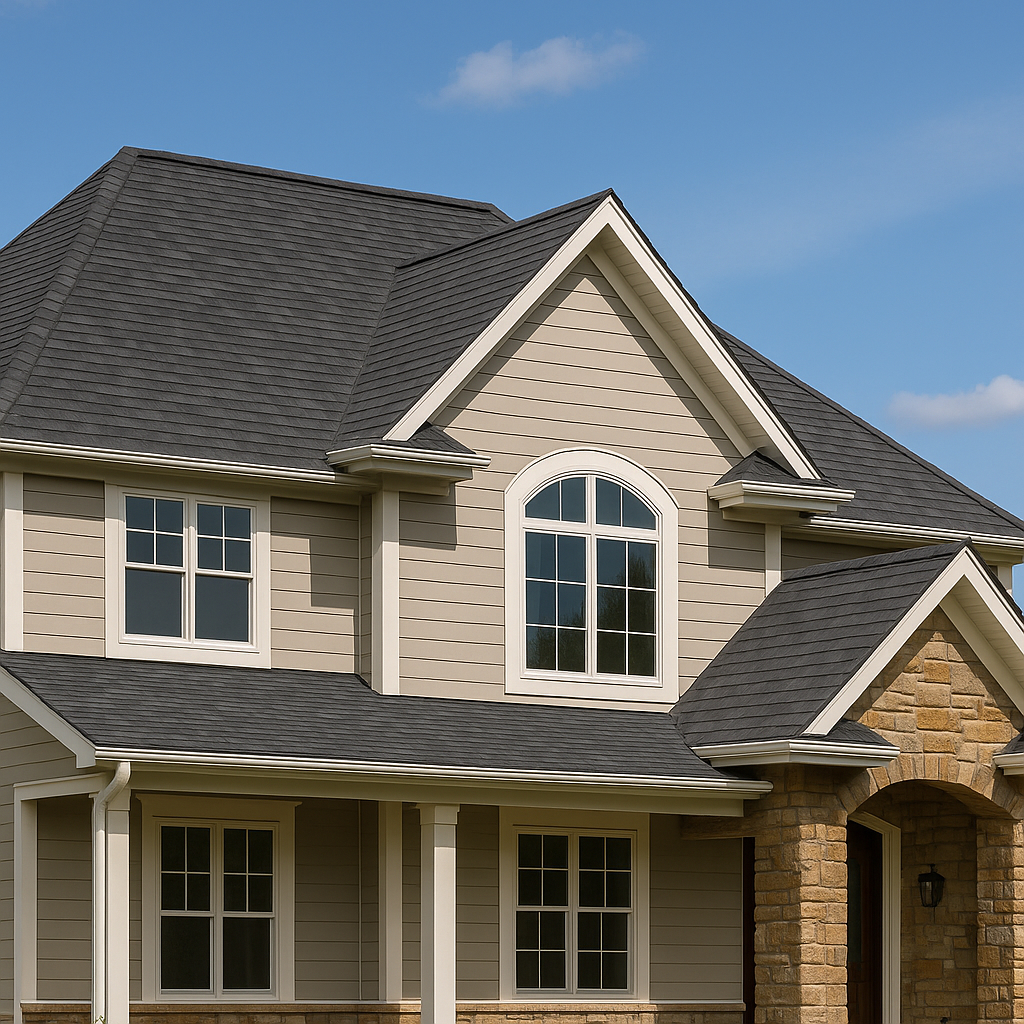
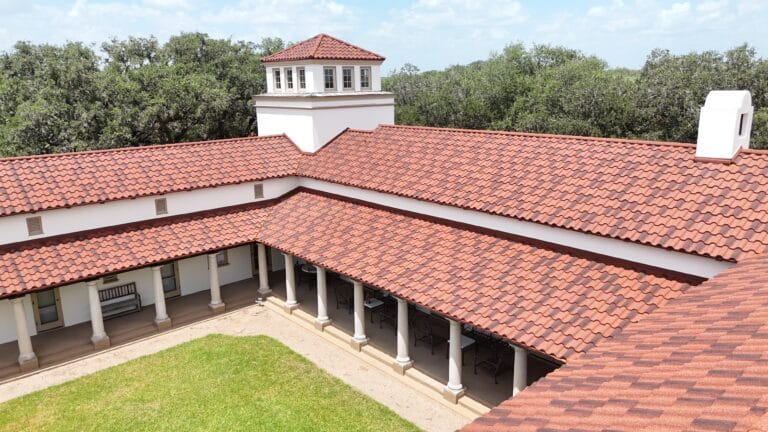
Curb appeal is personal, but each material creates a very different look. Architectural shingles come in dozens of colors and a dimensional, layered profile that blends into almost any Houston subdivision — which is why they dominate local neighborhoods and rarely draw HOA objections. Standing seam metal delivers clean, vertical lines that suit modern, farmhouse, and contemporary homes, while stone-coated steel is engineered to mimic asphalt shingles, wood shake, or clay tile — giving you metal's performance with a traditional appearance.
Both materials offer wide color ranges, including reflective "cool-roof" pigments that help during Houston's long cooling season. One design note: standing seam panels can show a faint waviness — known as oil-canning — on broad, flat runs. Texas law limits how far a homeowners association can restrict energy-efficient and impact-resistant roofing, but associations can still review panel profiles and colors, so confirm your deed restrictions before you decide.
Is a Metal Roof Louder Than Shingles?
This is the most common metal-roof myth we hear, and the honest answer is no — not when it is installed correctly. The "rain on a tin roof" sound comes from metal panels fastened to open framing with no solid decking, like an old barn or a patio cover. A residential metal roof is installed over solid plywood or OSB decking, a layer of synthetic underlayment, and an insulated, ventilated attic. That assembly absorbs sound so well that most homeowners find a properly installed metal roof no louder than architectural shingles during Houston's heaviest downpours and hail. If you want extra quiet, an additional underlayment or foam layer can dampen sound even further.
Resale Value & Return on Investment
A new roof is consistently one of the highest-return exterior improvements you can make, and it speeds up a sale by removing a major buyer objection. National Cost vs Value data shows an asphalt shingle roof replacement typically recoups a larger share of its (lower) cost — often in the 55–65% range — because buyers expect it as standard. A metal roof recoups a smaller percentage of its higher price, but it adds more absolute value and a longer remaining lifespan that buyers and appraisers recognize.
In storm-prone Texas, metal's durability is a genuine selling point: a transferable warranty, decades of remaining service life, and an impact-resistant rating that can lower the next owner's insurance all make your home easier to market. If you plan to sell within a few years, shingles usually make more financial sense; if you are staying long term, metal's value compounds. Run your own numbers with our roof cost calculator.
Durability, Hail & Storm Resistance
Beyond the wind ratings covered above, Houston roofs also face hail, wind-driven debris, intense UV, and prolonged rain. Here is how the two materials hold up:
- Hail: Steel and stone-coated steel panels carry a Class 4 impact rating (UL 2218), the highest available. Large hail may leave a cosmetic dent but rarely punctures metal. Standard asphalt shingles crack and shed granules under hail; impact-resistant (Class 4) shingles are available but degrade faster over repeated storms.
- Fire: Metal is non-combustible with a Class A fire rating. Quality fiberglass asphalt shingles can also reach Class A, but metal is inherently fireproof.
- Moisture: Metal's smooth, impervious surface sheds Houston's frequent heavy rainfall instantly. Asphalt absorbs some moisture, which over the years accelerates granule loss and underlayment wear — a real factor in flood-prone areas like Meyerland, Braeswood, and Bellaire.
- Weight: Steel and aluminum panels are actually lighter than asphalt shingles, placing less long-term load on your roof structure.
For homes inside Texas's designated coastal windstorm area, roofs must carry a WPI-8 windstorm certification to qualify for TWIA coverage. Most of the Houston metro sits inland of that TWIA-designated zone, but an impact-resistant roof still earns premium discounts from many Texas insurers.
Pros & Cons at a Glance
Metal Roofing
Pros:
- 40–70 year lifespan — often the last roof you will buy
- Best-in-class wind (140–160 mph), hail, and fire resistance
- Reflects solar heat instead of absorbing it, easing the cooling load
- Near-zero maintenance and no granule loss
- Non-combustible and up to 100% recyclable
- Can earn a homeowners insurance discount in Texas — your insurer sets the amount
Cons:
- 2–3× higher upfront cost than shingles
- Fewer contractors are trained to install it correctly
- Large hail can leave cosmetic dents
- Requires skilled installation to manage thermal expansion
- Some associations regulate panel styles
Asphalt Shingles
Pros:
- Lowest upfront cost at $4–$8 per square foot installed
- Fast installation and easy, inexpensive repairs
- Available in dozens of colors and styles
- Installed by virtually every roofing contractor
- HOA-friendly, neighborhood-standard look
Cons:
- Shorter lifespan — typically 15–25 years in Houston's heat
- More maintenance and post-storm repairs
- Granule loss and UV degradation over time
- Lower wind and impact resistance
- More landfill waste — U.S. tear-offs total over 10 million tons a year
The bottom line: Shingles win on upfront cost, speed, and simplicity; metal wins on lifespan, storm resistance, energy savings, and long-term value. For a Houston homeowner staying 15 or more years, metal usually delivers the better lifetime return — but for a tight budget or a near-term sale, quality architectural shingles remain a smart, proven choice.
Frequently Asked Questions
Is a metal roof louder than shingles in the rain?
No. Installed over solid decking, underlayment, and an insulated attic, a residential metal roof is about as quiet as architectural shingles. The loud "barn roof" reputation comes from metal fastened to open framing with no decking underneath.
Does a metal roof add resale value to a Houston home?
Yes, though it recoups a smaller percentage of its higher cost than shingles do. Metal adds more absolute value through its long remaining lifespan, transferable warranty, and impact resistance, which can lower the next owner's insurance premium.
Is metal or shingle better for a Houston roof?
It depends on your budget and timeline. Metal is the better long-term choice for homeowners staying 15 or more years who want maximum storm protection and low maintenance, while architectural shingles are the smarter pick for tight budgets or a sale within about 10 years.
Do metal roofs attract lightning?
No. Metal roofing does not attract or increase the likelihood of a lightning strike, and because it is non-combustible, it is actually safer than most materials if lightning strikes nearby.
Which Should You Choose?
Choose metal if you: plan to stay 15+ years, want maximum storm protection, value low maintenance, or are building new construction.
Choose shingles if: budget is the primary constraint, you're selling within 10 years, or your insurance claim is specifically for replacing existing shingles.
RISE Roofing installs both — we provide free, no-pressure consultations with actual pricing for your specific home and honest guidance on which makes more financial sense for your situation.